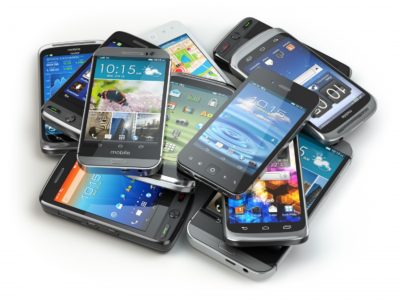
The mobile phone market in India is over crowded with over 75 brands and 3400 models. The market is very dynamic; the pecking order of firms is constantly changing with new brands challenging established manufacturers. Chinese brands such as Xiaomi, Gionee, Oppo and Vivo are now very prominent in the Indian market, sidelining established domestic brands such as Lava, Intex and Micromax. In 2018, Xiaomi replaced Samsung to become the top player in India by volume.
Mobile phones have been the key to India’s technology revolution. India is the second largest mobile phone market globally, next only to China. The industry is projected to contribute 8.2% to India’s GDP by 2020.
From 2007, competition has steadily increased. New brands flooded the Indian market leading to levels of hyper competition. A Delhi based think tank- ICRIER in its report on Mobile industry in India, analyses competition in the industry using data for the period 2007 to 2018. The analysis is based on the estimation of market concentration ratios, measures of product market differentiation, analysis of irrelevant firms and the entry-exit rate of brands in the market. During 2007 to 2018,Data use increases levels of competition across most segments in the market. Of late, the structural estimates have shown a tendency to increase, especially in segments where consolidation is taking place. Antitrust concerns surrounding this shift however are minimal.
The average selling price of phones decreased at a CAGR of 0.11% during the same period. A feature mapping exercise included in this report, finds quality improvements across different price bands of mobile phones.
The proportion of irrelevant brands have declined in most segments, although are still relatively high. The number of irrelevant firms implies that the level of effective competition could be lesser than implied by market structure measures. Policy interventions that empower a larger pool of competitive manufacturers and increase their relevance in the market, will reduce future risk. Government of India, during the last three budgets have tried to incentivise local production by raising duties on imported components. While local value addition has increased slowly, it is still low reflecting in part the efficacy of assembly in India and in part the disability that Indian manufacturing has to contend with.
According to Rajat Kathuria,Director and Chief Executive, ICRIER, the industry displays healthy competition with no immediate concern about exercise of market power by any one entity. The high proportion of irrelevant firms could either grow to be competitive threats in the future or just fall by the wayside. “Investments and targeted policy interventions will help develop long-term research and innovation capabilities. Government and industry must collaborate to build domestic capacity while maintaining healthy levels of competition”, he said.
For making India a manufacturing hub for mobile handsets, investments in R&D are necessary. India’s potential lies in addressing the under-served demand of nearly half a billion people, and the constant need for up gradation from the other half. Collaborative steps by the government and industry can help build domestic capacity while maintaining healthy levels of competition.
=================